Unlock the Secrets of Media Success:
Grab Your Exclusive Video and Insider Notes on the '7 Key Elements Media Seek in Subject Matter Experts' Now!🌟


































If you said “yes” at least once, there’s an Instant PR plan here for you.
Answer a few questions and in a few days, we’ll write your story and launch a PR Plan that will strongly position you as a leading industry expert.
Tell us about you and we’ll tell the world!
Publicity guaranteed and easily executed to provide quick results from PamPerryPR.

Get your audience saying this about you! Click here to learn more.
Build Your Brand, Get Exposure, Increase Sales
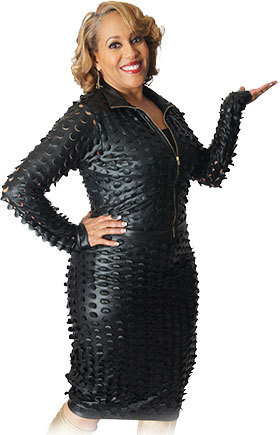
Whether you want to share your message with the world, increase product and service sales, or use the latest social media and PR strategies to "get out there," you’re in the right place.
As your PR Coach, I will share with you strategic and effective ways to leverage new media to reach your goals!
It's time for you to know exactly how to:
Accelerate Your Business With These Resources
Let's make the world take notice of your expertise!
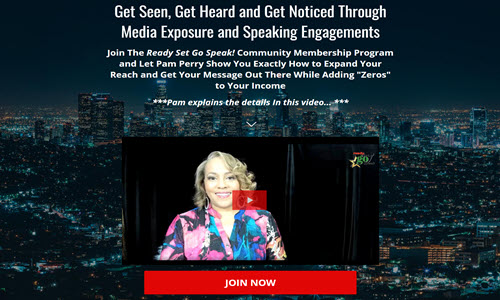
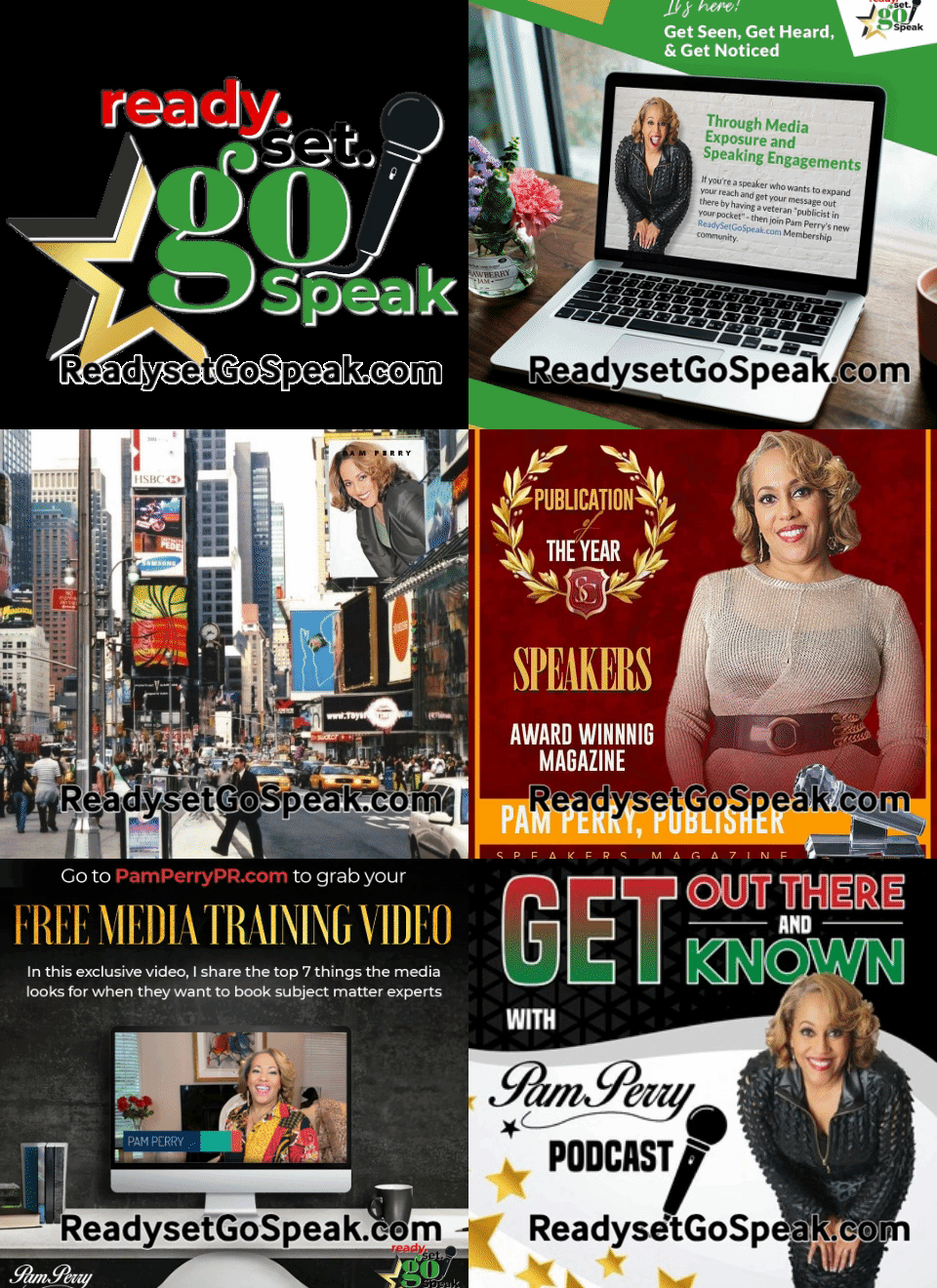
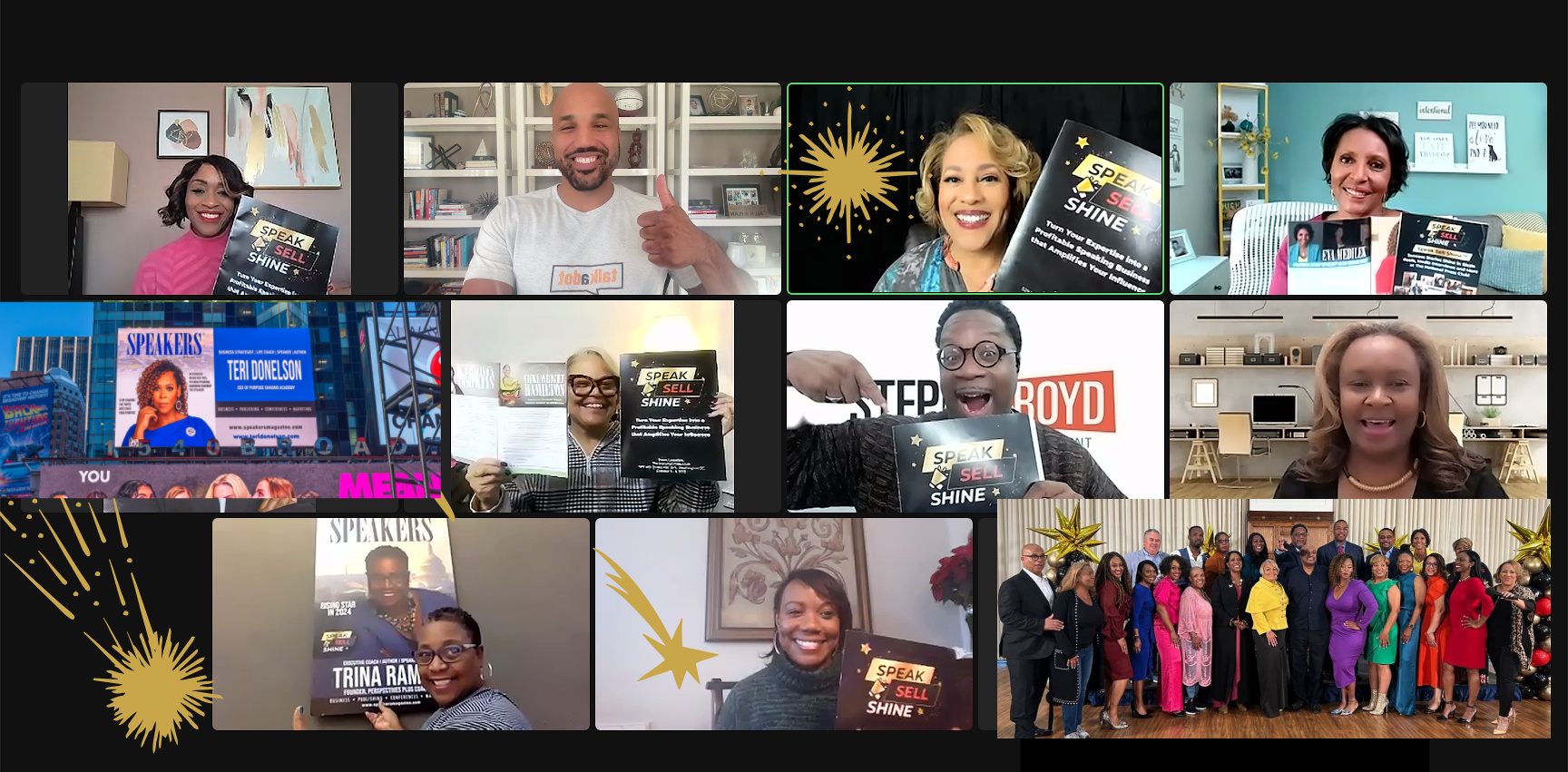
Step into 'Ready Set Go Speak!', a dynamic community created for the ambitious, the driven, and the visionaries tired of generic programs and hungry for real results. This is where aspiring speakers transform their passion into a robust, thriving speaking business. It's not just about learning; it's about doing, growing, and excelling with direct feedback and actionable strategies.
Imagine a space where every interaction propels you towards your goals. Here, you don't just access resources; you immerse yourself in a rich environment of videos, audios, checklists, and interactive worksheets, each designed to fine-tune your speaking prowess. Our planners, media lists, guidebooks, and templates aren't just tools; they're catalysts for your success.
Being a part of 'Ready Set Go Speak!' means more than joining a community; it means contributing to the influential SPEAKERS MAGAZINE, elevating your status as a subject matter expert! You're not just learning PR; you're living it, getting regular exposure that amplifies your brand and message.
Under the guidance of Dr. Pam Perry and her team of seasoned moderators, you'll receive personalized feedback, participate in transformative Hot Seat Trainings, and engage in a private community where every member is committed to mutual growth. This is your chance to connect with peers, learn from industry leaders, and access insider PR tips and media contacts regularly.
If you're ready to build a speaking business that doesn't just exist but resonates across platforms, 'Ready Set Go Speak!' is your haven. Here, ambition meets action, vision meets validation, and speaking turns into an influential career. Join us, and let's create your legacy in the world of public speaking, one powerful connection at a time.

Digital Publicity is the future of getting press coverage. Meaning, you can gain exposure faster and easier when you distribute your news on presswires. This gets you indexed by Google News and all the major search engines making you “googlicious.”
EIN Presswire syndicates your press release to ABC, CBS, Fox, AP and NBC news sites, as well as radio stations and major news outlets like AP and Yahoo News with heavy presence on social media to maximize reach.
Establishing yourself online gets you one step closer to your dream of being a guest on shows like the Today Show and GMA! Their proprietary distribution footprint reaches millions.
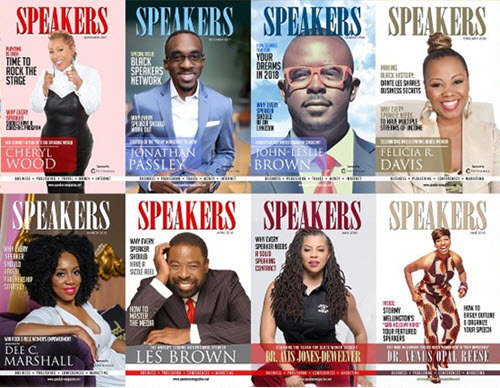
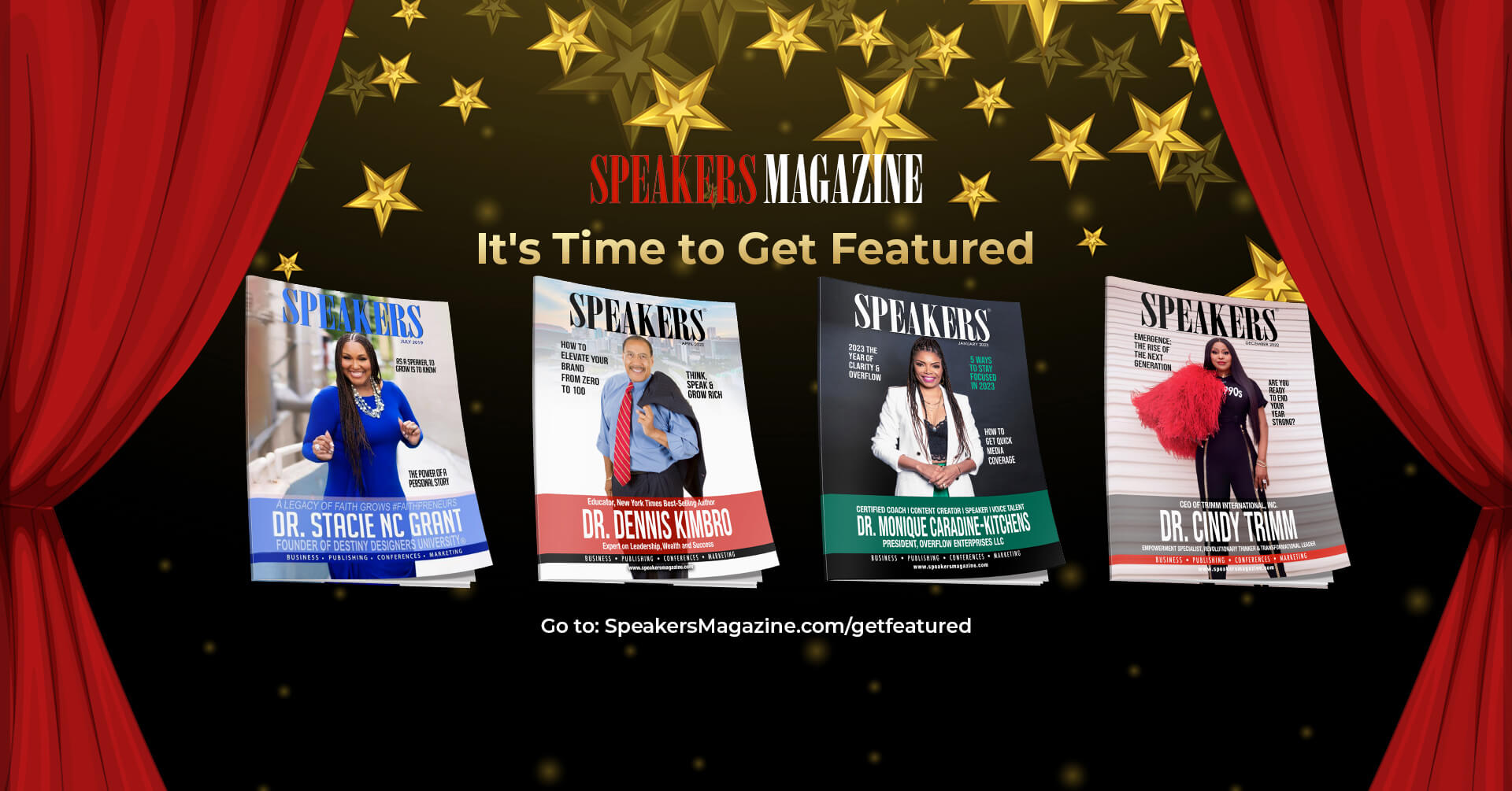
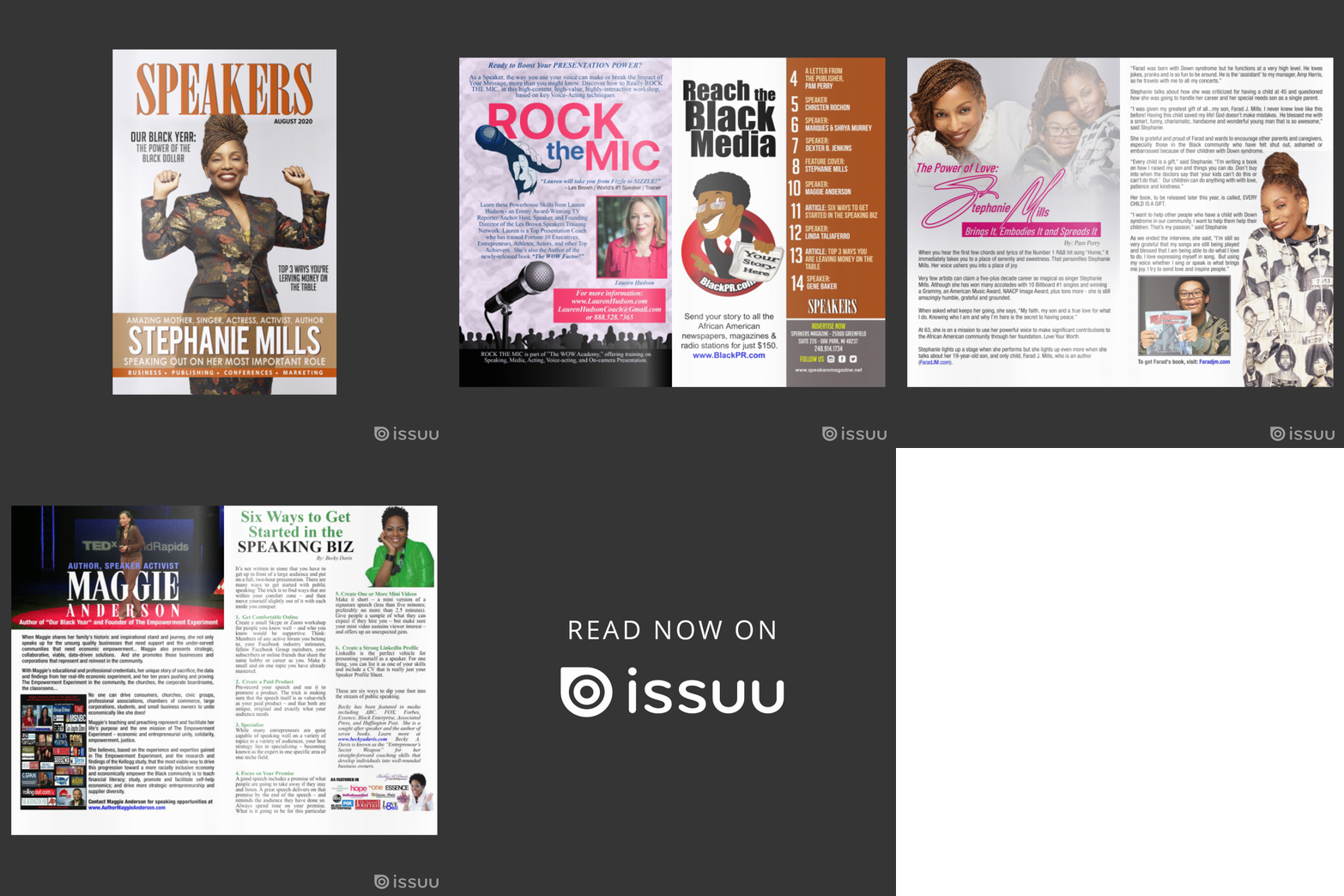
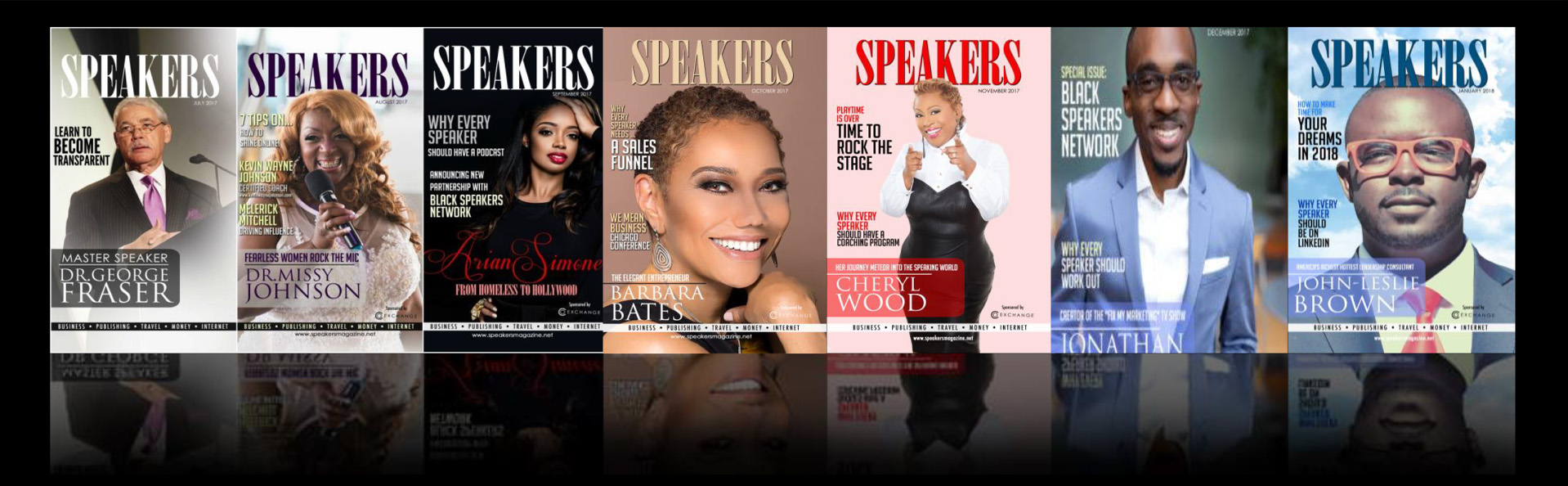
SPEAKERS Magazine: Discover the Gateway to Speaking Stardom
Unlock the secrets of the speaking elite in SPEAKERS Magazine, where dreams become reality and the stage becomes your realm. This award-winning publication isn't just a magazine; it's a spotlight shining on the luminaries of the speaking world, a treasure trove of strategies and insights from the megastars of the industry.
Imagine your story unfolding alongside theirs, your voice echoing in the halls of success.
In SPEAKERS, you don't just read about success – you're invited to be a part of it. Our pages are a launchpad for ambition, a platform where top performers don't just share their journeys; they ignite your potential. Every issue is a masterclass in excellence, a fusion of upscale image, prestige, and intellectual prowess. It's not just about being in the know – it's about being on the rise.
Our readers are the visionaries of tomorrow, media professionals, meeting planners and those who want constant self-improvement. In SPEAKERS, you'll find more than inspiration; you'll discover tools to elevate your skills, maximize your time, and enhance your appearance.
You're not just building a brand; you're sculpting a legacy.
Join the ranks of the best speakers in the country, featured in SPEAKERS Magazine. This isn't just publicity; it's a pathway to being found, booked, and celebrated. Embrace the opportunity to transform your speaking career, to turn your aspirations into accolades. Your audience is waiting. Are you ready to take the stage? Step into the world of SPEAKERS Magazine – where speaking dreams are not just visualized, they're realized.
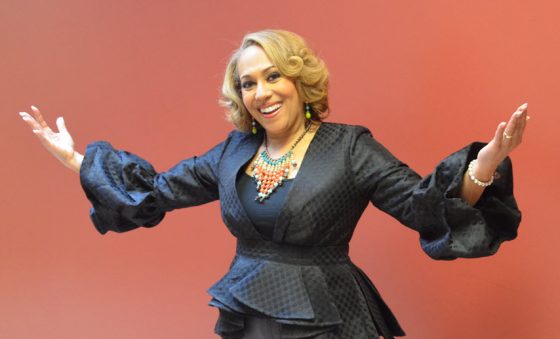
Meet Dr. Pam Perry
I'm Dr. Pam Perry, known to many as the master of connecting the right people, for the right project, at the right time. I am an award-winning communications professional with a 30+ year career expertise in marketing, public relations and TV production & journalism (with a local Emmy to my name too).
I consult with speakers and authors on how to build a platform, get press and attract major media and publishing contracts. I am also the publisher of SPEAKERS MAGAZINE and podcast host of: The Speakers Magazine Show, Pam Perry's Picks on Amazon LIVE and The Get Out There & Get Known Podcast on iHeart Radio, Apple podcast, Spotify and any place you listen to your podcasts!
Discover the Dr. Pam Perry PR Blog
Stay up to date with the latest tips, tools & trainings
What Others Are Saying...
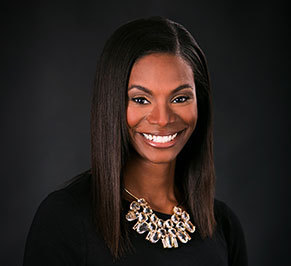
Tamira Chapman
Crain's 40 Under 40 Winner...
"Pam Perry is a visionary strategist backed with over 20+ years media expertise. When you retain Pam Perry PR, you get Pam, not a partner or associate. You receive her authenticity, candor and commitment to excellence. Notwithstanding the above, Pam’s best quality is seeing clients for who they could be, not at as though they are - then challenging them to rise in excellence and take their rightful place. Pam has the ability to call things that are not as though they were and transform that belief into action. An investment in Pam Perry is a priceless investment in you that will yield results for decades to come."
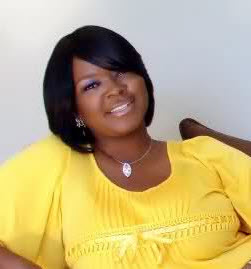
Dr. Ty Adams
Became a Best-Seller...
"All too often aspiring authors around the world want to know the secret to my success. Well, here’s my secret: I became a best-seller because of Pam Perry's Company! She's the best!
Tony Gaskins Jr.
I've been able to tell my story on Oprah...
"I wanted to let you know I’ll be a Guest Expert on the Tyra Banks Show on Monday! Thanks to you! I’m on your mailing list, so I’m able to take part in all of the teleconferences you promote and I’ve learned soooo much! And as a 25 year old mediocre Author/Motivational Speaker I’ve been able to tell my story on Oprah and be a Guest Expert on Tyra within a month of one another. Aint God Good!!! Thanks!!!"
Kim Brooks
Produces Results...
"Ministry Marketing Solutions (Pam Perry's company) has been the best thing that could ever happen to my writing and publishing career. I recommend Ministry Marketing Solutions to anyone desiring to work with a publicity team who thinks outside the box, goes above and beyond the call of duty, keeps their clients’ ultimate goals in mind, and produces results. They’re great!"